Fast unlimited Internet at sea is not just becoming a must but is expected to meet all modern standards of communication, including the ability to use streaming services and artificial intelligence. Being on board a yacht today nobody wants to give up the lifestyle and entertainment “like home”.

Starlink Maritime offers the yachting world an efficient and budget-friendly solution. Until recently its service covered only the coastal areas, but in March 2023 Starlink’s Internet coverage of the oceans became full, and the connection speed is now up to 350 Mbps.
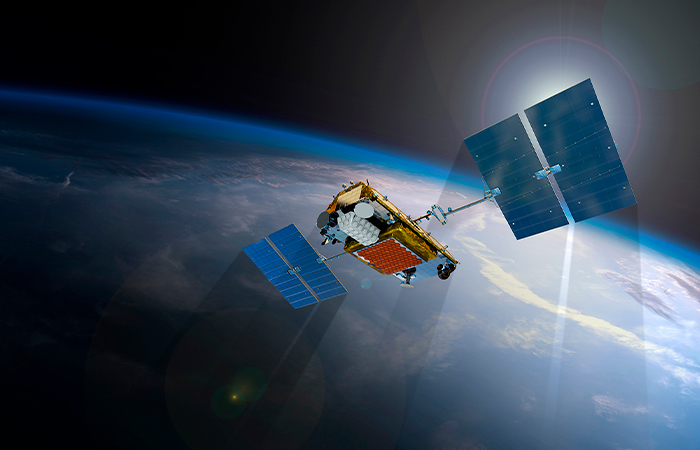
Starlink technology is based on a group of LEO (Low Earth Orbit) satellites, flying at an altitude of 540-560 km. There are currently 3,300 satellites working in the network, and in the future, their number is going to increase to 12,000 and more.
LEO satellites are capable of providing a considerably faster Internet connection, but there has to be a lot of them to cover the Earth. Due to their small size, they are cheaper to manufacture and deploy and can be launched into orbit in batches of up to 64 satellites simultaneously.

Traditional yacht communications system VSAT is based on GEO (Geostationary Earth Orbit) and MEO (Medium Earth Orbit) satellites, flying at an altitude of 36,000 km and 20,000 km respectively. GEO satellites are larger and launched into orbit one by one. High orbit altitude provides full coverage of the planet (except the poles) with a small number of satellites. The data rate is relatively low, and the signal is delayed.
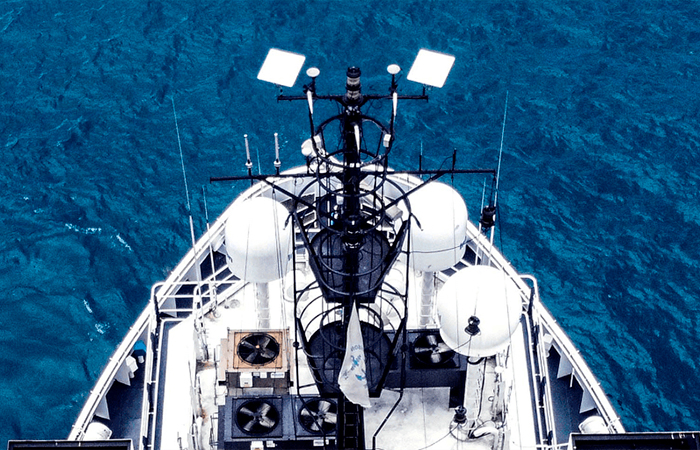
Another advantage of Starlink is that it’s easy to install, compact, and, as the company promises, low-cost, because instead of a dome-type antenna one can use a small flat antenna and place it on a deck. The compact size and low cost provided Starlink Maritime with a big lead over its competitors: today the price of a basic kit of two flat antennas (main and backup) is $10,000; unlimited traffic is $5,000 per month. The speed of incoming Starlink Maritime traffic is up to 350 Mbps, and the outgoing one is up to 40 Mbps. This is faster than most home Internet users have on land. Besides, there is no need to sign extra contracts with satellite TV providers. The service can be ordered either directly or from the brand dealers: for example, you can buy a Starlink antenna from Auvu company at the price of $2,500.
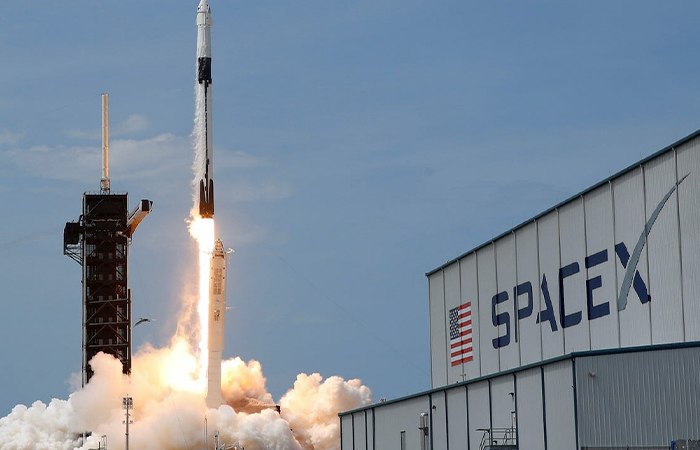
OneWeb has been building up the number of LEO satellites since 2019 and intends to provide global coverage with its Internet during 2023. In contrast to Starlink, OneWeb satellites fly at a higher orbit (120 km), and for its full operation, the system needs 648 satellites (As of March 10 there were 582 OneWeb satellites in orbit). OneWeb speed is lower than that of Starlink: the incoming traffic is up to 125 Mbps, and the outcoming is up to 25 Mbps. At present OneWeb offers traditional dome type antennas, but they are considerably lighter and more compact than those of VSAT. The “maritime” version of a flat OW1 antenna is not available yet, but the OneWeb system can integrate with Kymeta flat satellite receivers.
Amazon is also working on the creation of its network of 3,000 LEO-type satellites. The Kuiper project is expected to start working full-scale no earlier than 2026. There are other companies with similar plans, too. If all of them go into space, the number of satellites in orbits around the Earth will increase 40 times and reach 200,000 units.
Thus, Intellian XEO switches automatically from GEO to MEO or LEO satellites, depending on which of them provides better coverage and speed.
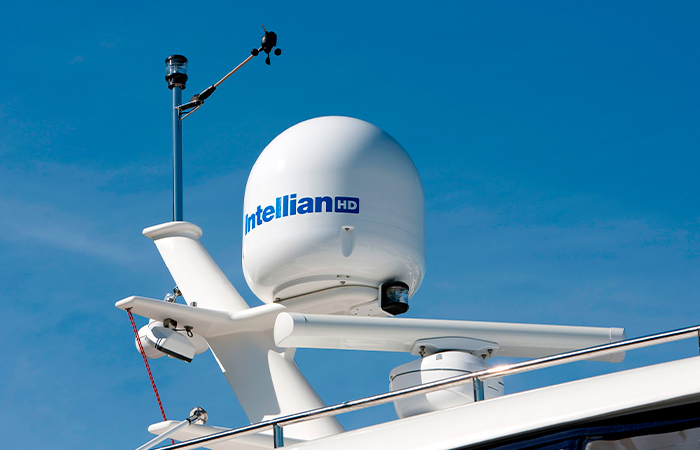
FMC GlobalSat company offers a solution for receiving data from GEO, MEO, and LEO satellites, as well as 5G and 4G networks. KVH company launched TracNet H90 which combines VSAT, 5G, and Wi-Fi in one antenna and integrates with Starlink by switching automatically from one to another.
Hybrid Edge from Excelerate Maritime is capable of getting data from OneWeb, Starlink, 4G/5G, and GEO satellites, providing fast interchangeability of sources of communication and maximizing its speed.

To sum up, Starlink is the first system of LEO satellites that entered the mass market. It is appealing due to the speed and low-cost connection to the service. But competition is growing, and space is getting more and more crowded with LEO satellites. Astronomers are not pleased with it, but your children will be happy to chill out playing games or watching fresh series right in the middle of the ocean.