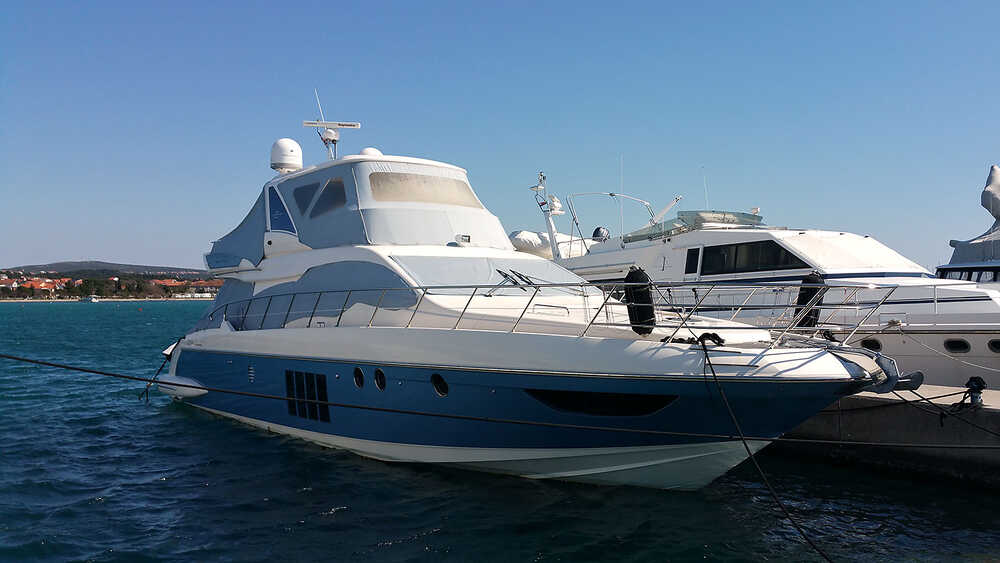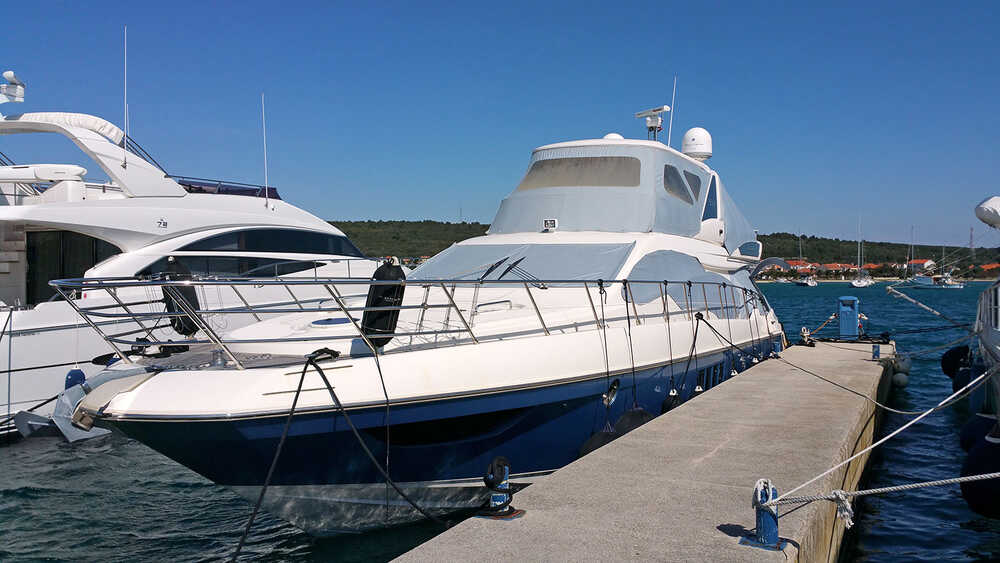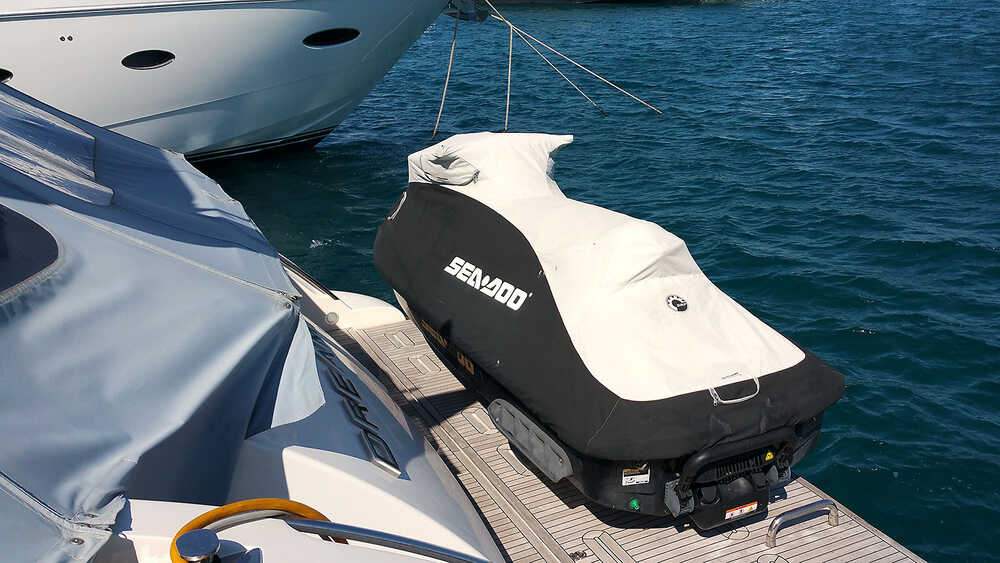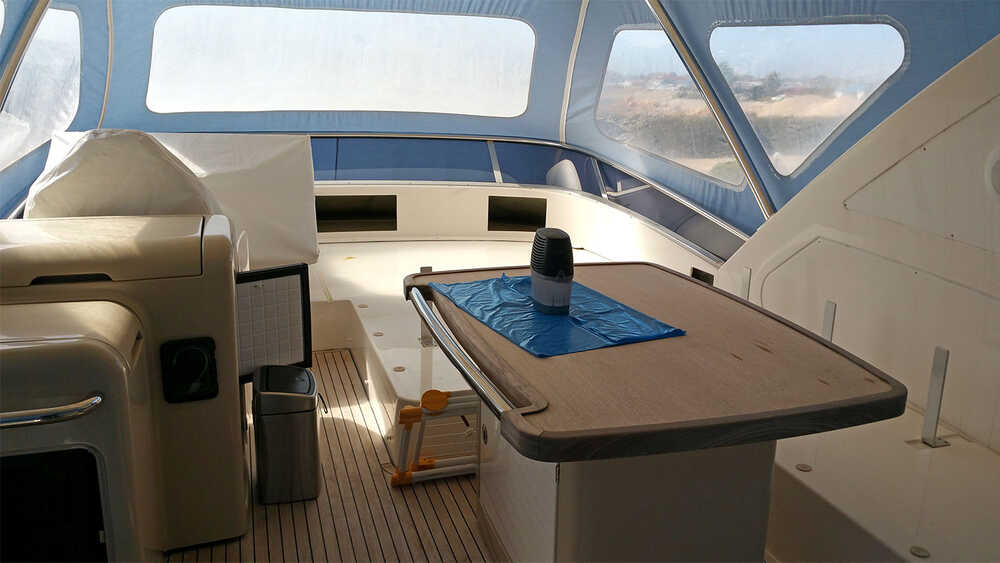
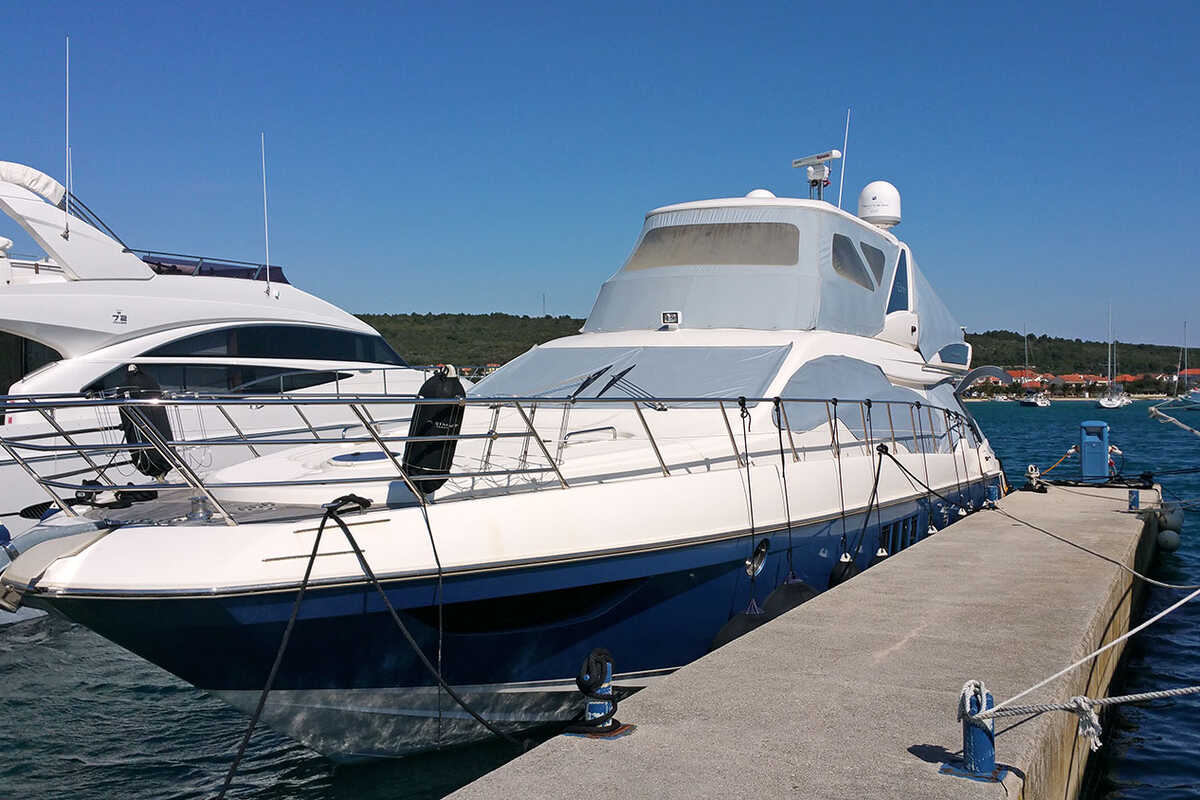


The structural design of the hull has been approved by RINA (CE approval category A). This guarantees the structural quality which is enhanced by the use of innovative materials and technologies. The hull and all the superstructures (deck, deckhouse, flybridge) have been built using the infusion technique. This construction technology reduces weight and, at the same time, improves construction control and quality. Bow and stern, engine room and crew cabin trays: these are structural trays made through infusion. A key element in this transformation is the increasingly widespread use of latest generation structural bonding agents (instead of taping). Fibre glass structure with multiaxial fabrics and powder bonding agent as well as carbon fibre to reinforce areas subject to the highest stress. Neopentilic and isophtalic spray gelcoat. PVC foam is used for the sandwich panels on the hull, deck and superstructures. The structural engine room, collision and bow bulkheads are made of PVC infused sandwich.
Structural calculations have been checked using FEM model analysis. FEM models have been created for the hull and all the superstructures. This calculation system, based on systems used in the aeronautical and automotive industries, simulates the behaviour of the boat when it is subjected to the most severe conditions of stress and accurately tests stress and deformation. Vinylester resin (maximum resistance to osmosis and print through marking) has been used on the entire hull. Isophthalic resin has been used for the superstructures.
On the strength of these characteristics, AZIMUT is able to offer a 5-year warranty against osmosis. Planing keel with deadrise of 17° at the stern and 20° amidships.