

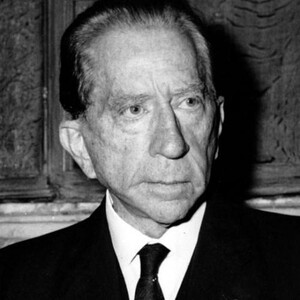
Greek tycoon and one of the wealthiest men of the 20th century, who built the biggest oil tanker empire in the world and pioneered the idea of registering ships offshore.
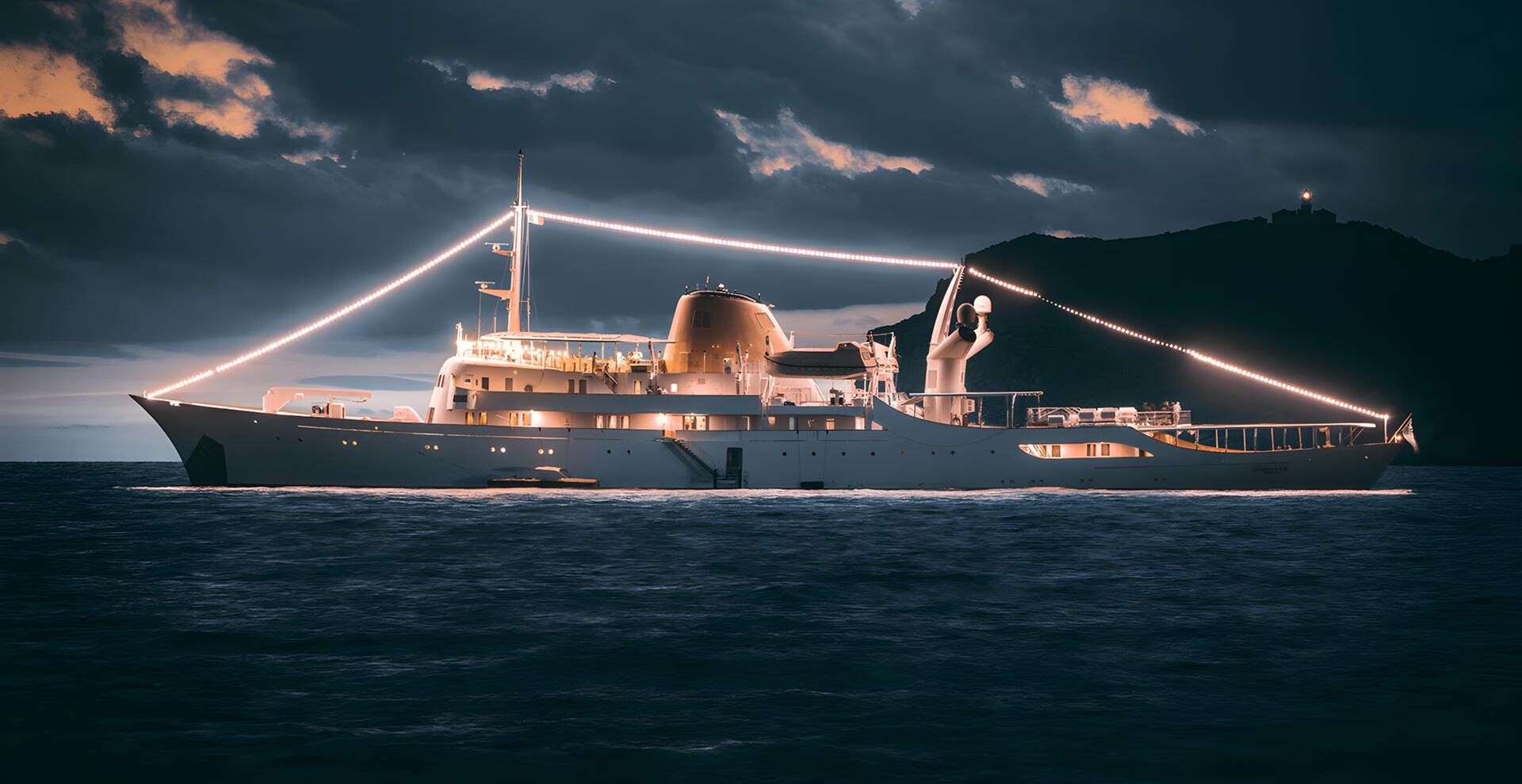
Christina O is living history incarnate—a warship turned into a luxury yacht that has become witness to the greatest events of the 20th century. She has seen influential people from all over the world—politicians, businessmen, aristocrats, movie stars and show business celebrities—bask in the sun, connect and socialise on her decks.
The history of this yacht is a vivid chronicle of the trials and tribulations in the lives of her owner and guests. Having survived war and the ending of multiple eras, Christina O is a legend in her own right—a reminder of a time when luxury and history fused together to form an atmosphere of grandeur and power.
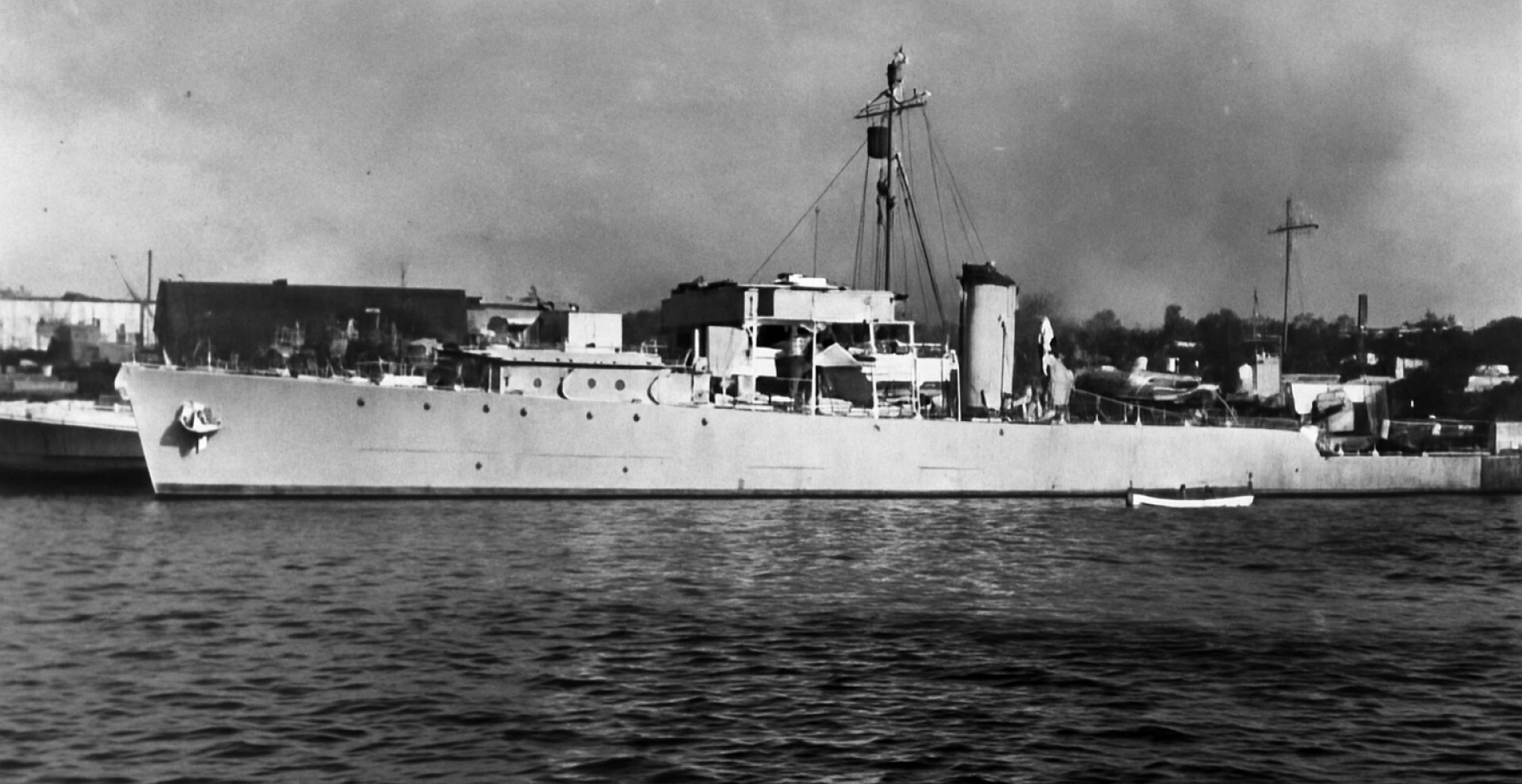
River-class frigates, introduced in Great Britain at the beginning of World War II, became a symbol of power. Named after rivers, which brought about the class designation, these vessels possessed high speed, a range of up to 7,000 nautical miles and upgraded armaments. They served as coastal defence ships and protective escorts. A total of 151 River-class frigates were built for the navies of seven countries during the war, including Canada. In 1941, the Canadian government ordered 33 River-class frigates—HMCS Stormont among them. Its keel was laid on 23 December 1942 at the Canadian Vickers shipyard in Montreal. The ship was named after a county in Ontario. After its launching on 14 July 1943, Stormont was officially commissioned into the Royal Canadian Navy under pennant K327.
Powered by a 5,500 hp propulsion system, the 92-metre frigate could reach speeds of up to 20 knots. Its armaments included two 102mm multipurpose guns, eight 20mm Oerlikon anti-aircraft cannons, a 24-barrel 178mm Hedgehog anti-submarine mortar, and up to 150 depth charges. The ship was crewed by about 150 men.
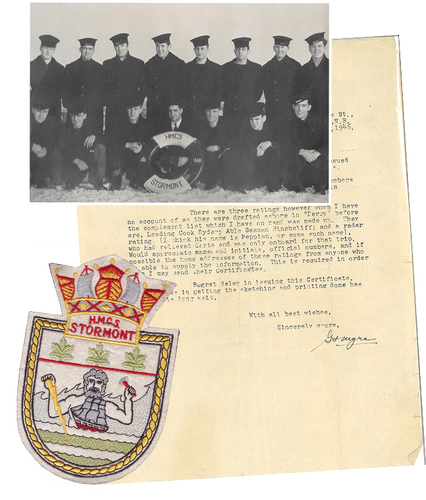
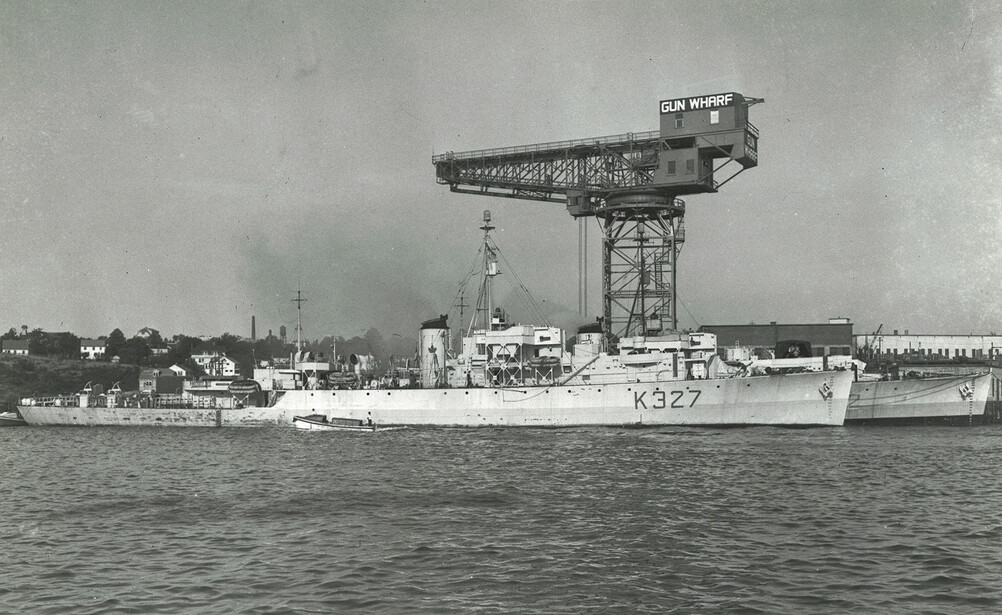
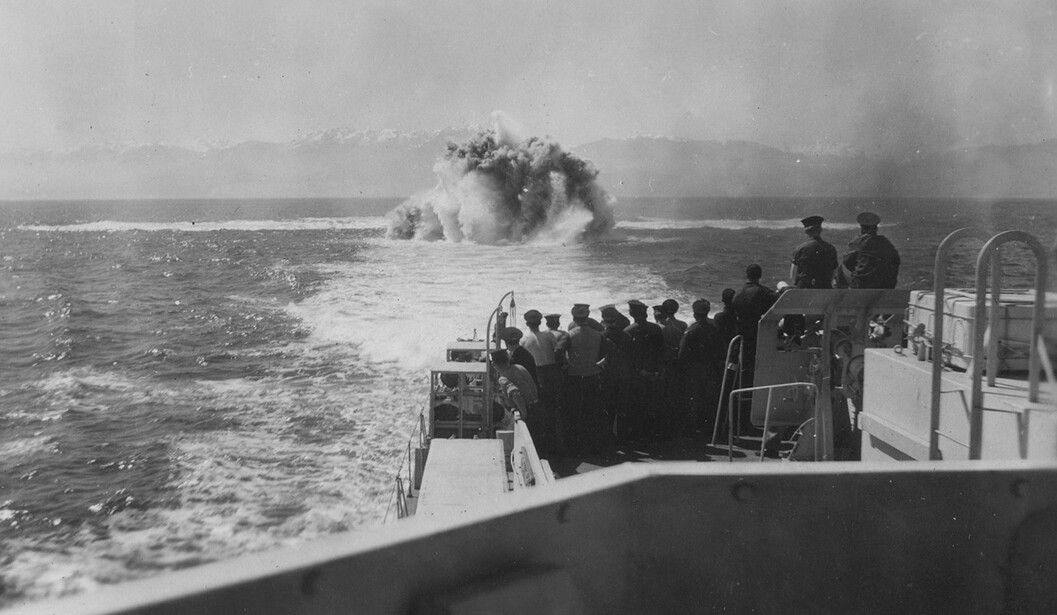
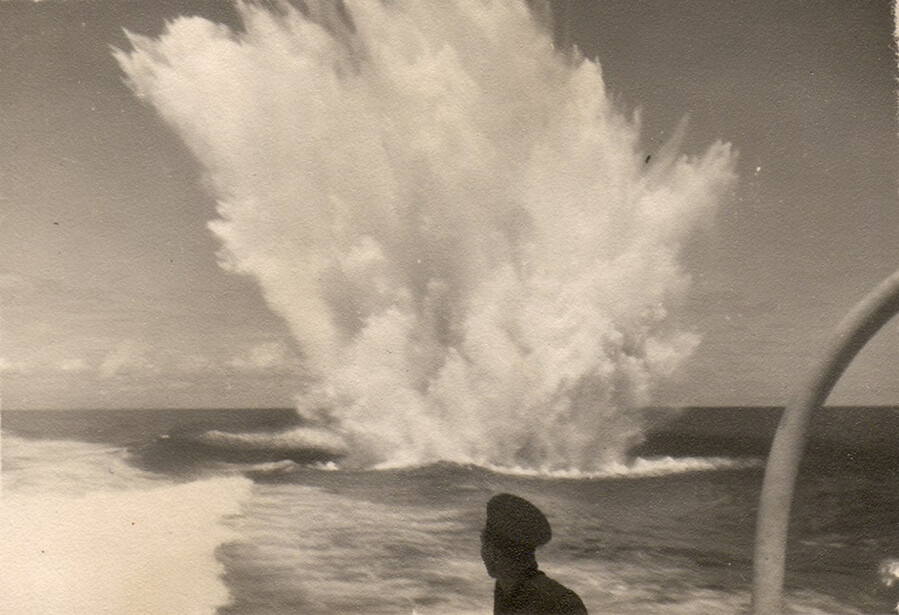
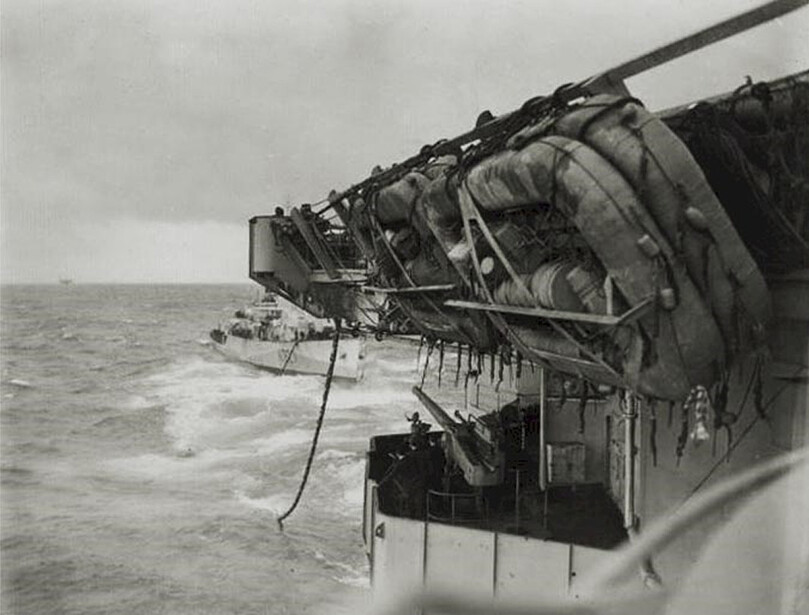
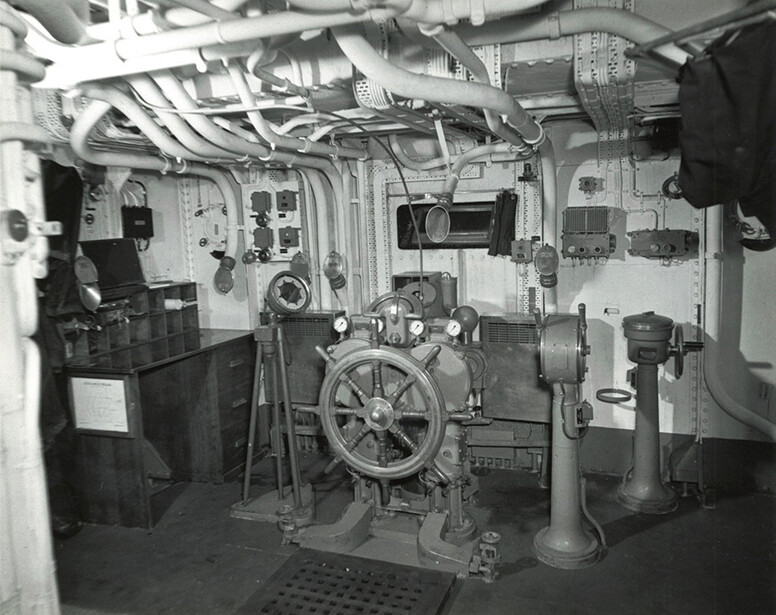
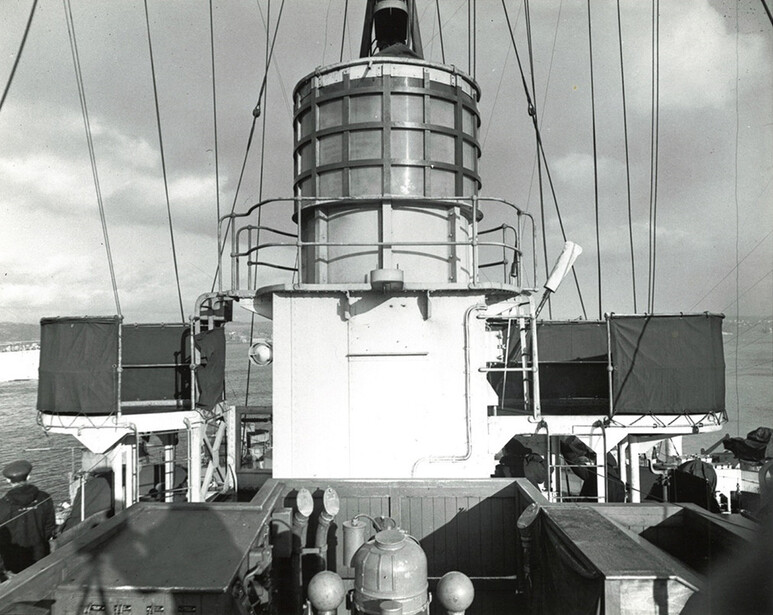
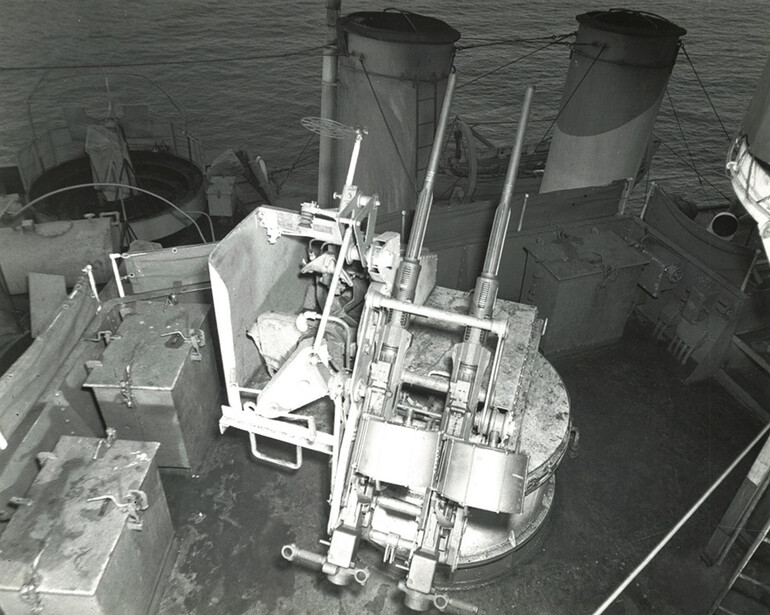
Operation Neptune, or the Allied landing in Normandy on 6 June 1944 was the culmination of Stormont’s wartime service. This largest amphibious assault in history involved more than 1,200 military and 500 civilian vessels. In July 1944, Stormont towed another Canadian frigate, HMCS Matane, damaged by German bombers, out of the theatre of operations to Plymouth.
In autumn 1944, Stormont escorted convoys to Gibraltar. Later that year—in December—it was transferred to the North Atlantic, where its crew experienced all the challenges of service in the Arctic. In one of the missions, it escorted convoy JW 62 to Kola Bay not far from the Russian northern city Murmansk. Harsh weather and German submarines patrolling off Kola Bay made this operation one of the most difficult in the history of convoys. Stormont was designed for such missions, though. One of its trips lasted 63 days, a record among Canadian River-class frigates.
After the war, Canada downsized its navy. In 1947, Stormont was mothballed and then sold to be converted into a cargo ship. However, that wasn’t what fate had in mind.
In 1951, Aristotle Onassis bought the legendary frigate for $34,000—a sum that could buy old scrap at most. He spent $4 million (about $330 million today) to turn the dilapidated vessel into a luxury yacht. The restoration at the Howaldtswerke shipyard in Germany lasted a year and a half. Onassis was determined to design a unique yacht and oversaw the process personally.
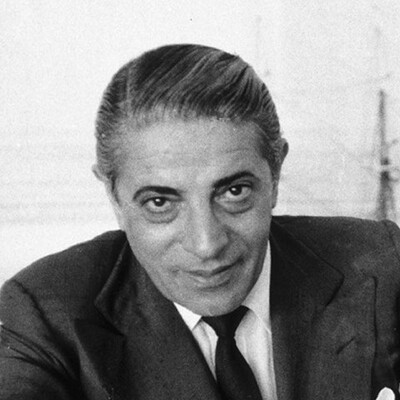
Greek tycoon and one of the wealthiest men of the 20th century, who built the biggest oil tanker empire in the world and pioneered the idea of registering ships offshore.
The hull and exterior of the yacht were remodelled by Cäsar Pinnau, a German architect. The ship’s side profile became more sleek, with a high aft deck. Onassis’ requirements posed what were considered almost insurmountable technical challenges at the time—he wanted the yacht to carry a fleet of tenders, which was unheard of for a private yacht in post-war Europe. Aside from two lifeboats, Christina was to carry five speedboats, a glass-bottom boat, a centreboard, two kayaks, a Fiat 500 and a five-seat Piaggio P136 seaplane. The engineers faced the delicate task of stabilising such a vessel, which was partially accomplished with the Vosper stabilisers.
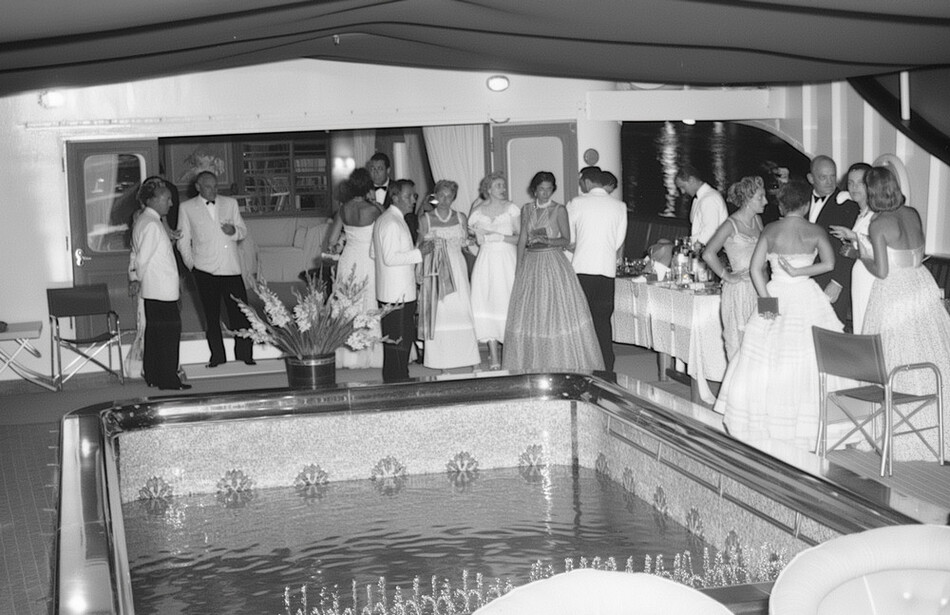
There was also an electronic climate control system that regulated the temperature in the swimming pool, the bottom of which could be raised to create a dance floor. All this powerful machinery required constant power supply by four generators, which meant additional soundproofing.
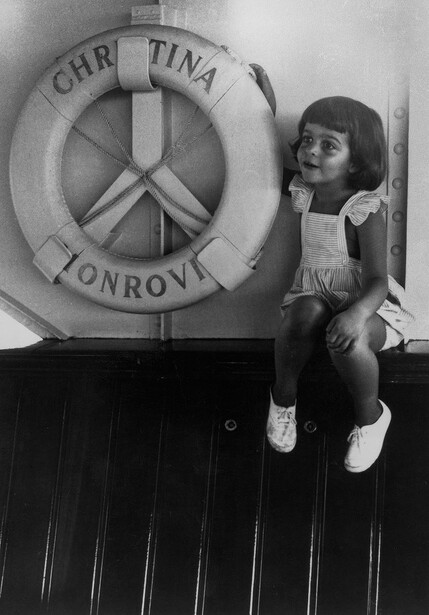
After her reconstruction, Christina, named after Onassis’ daughter, bore little resemblance to Stormont. The hull was extended by almost 9 metres, while the engines and the bow underwent a complete overhaul.
All the bathrooms were marble, the fittings were gold. The fireplace was inlaid with lapis lazuli. Frescoes by Marcel Vertes depicting the Onassis family in different seasons—Tina (Onassis’ first wife) ice-skating, Alexander and Christina having a picnic—adorned the dining room.
The nine guest suites were named after the islands of Chios, Ithaca, Santorini, Mykonos, Lesvos, Andros, Crete, Rhodes and Corfu. They had a finishing made from wood and stone sourced from the Greek islands. The owner’s suite was located on the deckhouse deck and had three rooms: a bedroom, a study with a Louis XV-style desk and a lavish bathroom, where mosaics similar to those of the lost Palace of Knossos surrounded a blue Siena marble bathtub with gold fittings.
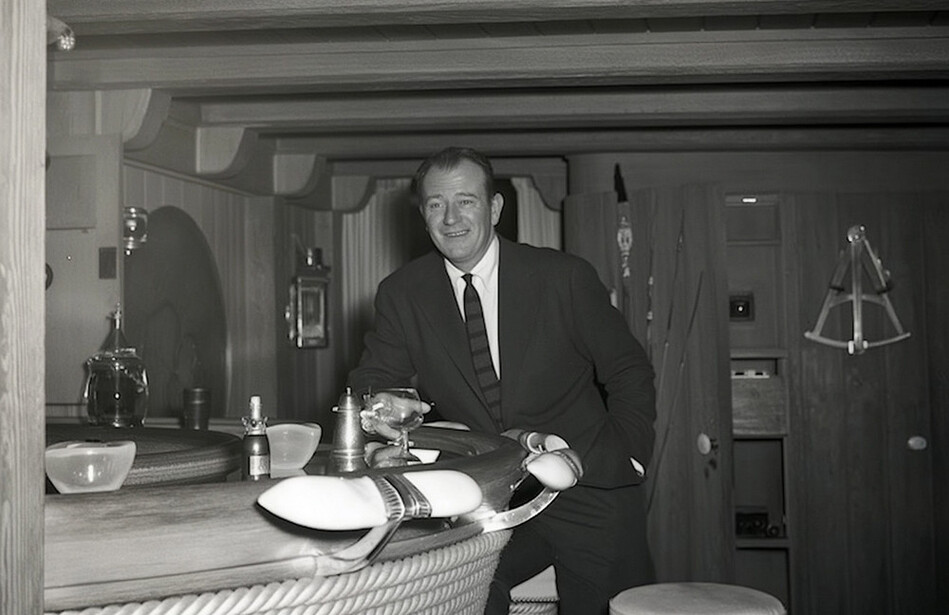
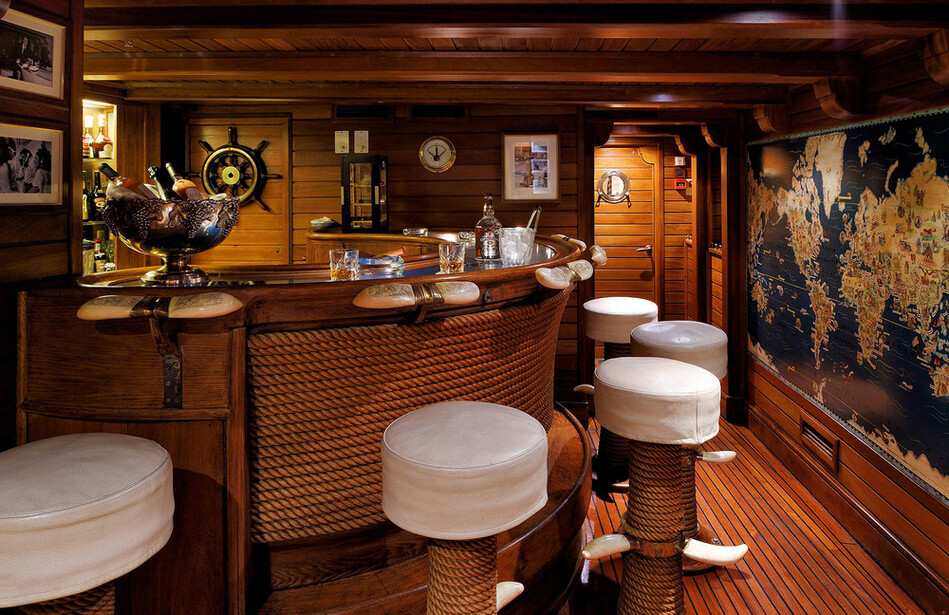
In Ari’s bar, the bar stools’ upholstery was crafted from the foreskins of whales. The footrests were made of whale teeth and the armrests on the bar were ivory with scenes from The Iliad and The Odyssey carved into them. Rumour has it that Onassis once noticed Greta Garbo sitting on one of those stools and asked, “Madame, do you realise that you are sitting on the biggest penis in the world?”
Christina’s galley served gourmet food and fine wines, and there were two hairdressers, a butler and a masseuse in the crew. The decks were connected by a lift. The yacht also had an operating room with an X-ray, a telex and an internal telephone network.
The Ari’s Bar is one of the yacht’s interiors that mostly preserved their original look. Some believe that the owner invested all of his fondness and memories of successful whaling into this room. Fortunately, the looters who ransacked the yacht after her owner’s death could not recognise the historical value of the bar. Virtually everything remains as it was when Onassis was alive: the rope-adorned bar counter, the white leather stools, and the map occupying an entire wall. New decorations were added, as well—namely, portraits of actors John Wayne, Elizabeth Taylor and Richard Burton, and of other celebrities who had visited the yacht.
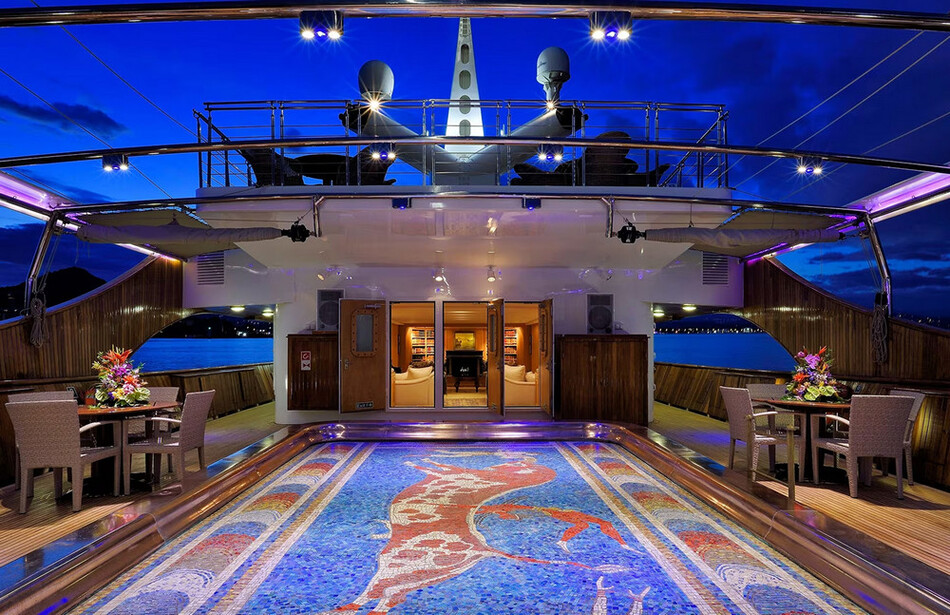
The pool/dance floor, which took a year to restore, is unique. There was enough space on the yacht for both a pool and a separate dance floor. However, Onassis opted for an innovative approach that had never been done before.
The tessellation recreates a scene from the Palace of Knossos of Crete, which depicts a female gymnast vaulting over a bull. These original tiles have been preserved. The pure copper pool fencing is authentic, too, as is the elaborate mechanism that raises and lowers the pool floor. Many deem it a work of art.
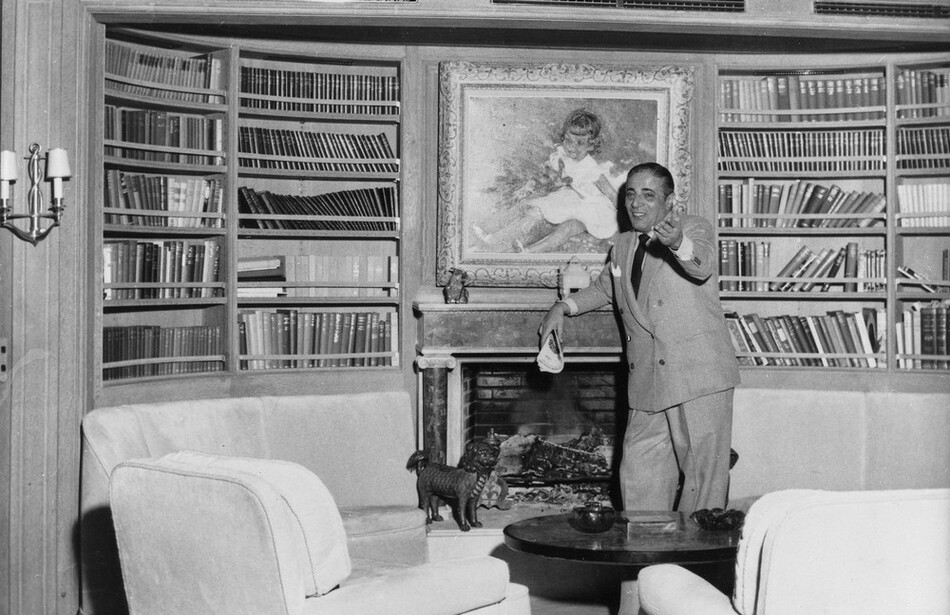
Onassis’ three-room suite has been restored to an almost pristine condition. His former study, with its Louis XV-style desk, has now been converted into a private sitting room with a painting by Renoir hanging above the marble fireplace. The bathroom is fitted with a large shower and a marble bathtub, but it is not the same blue Siena marble bathtub surrounded by mosaic that was there in Onassis’ time.
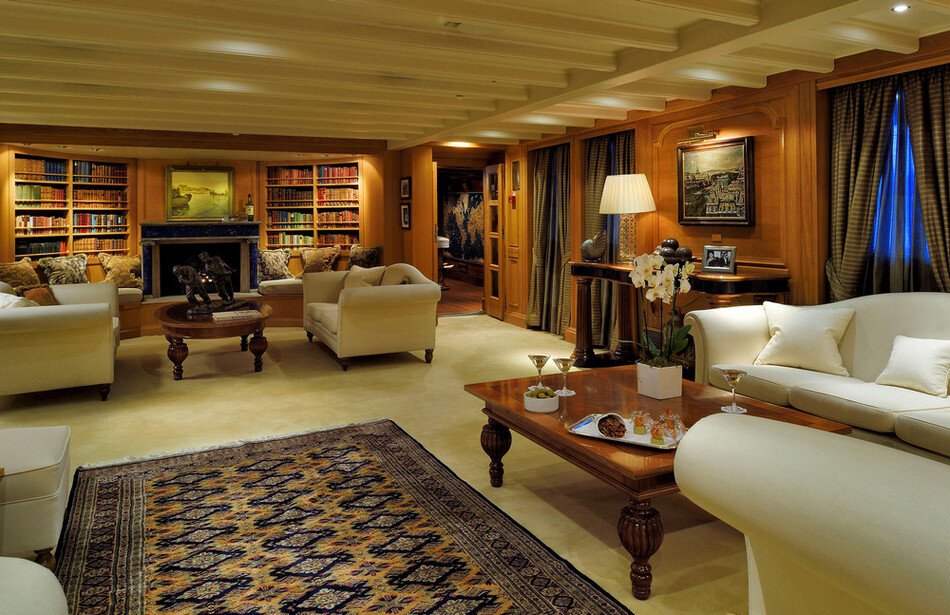
In Maria Callas’ classically furnished sitting room, her original Steinway grand piano serves as a memento of her greatness. Right at the entrance, you can see her wedding rings and a silver Tiffany dish gifted to her by Kennedy. The lounge is also home to the diva’s complete collection of recordings.
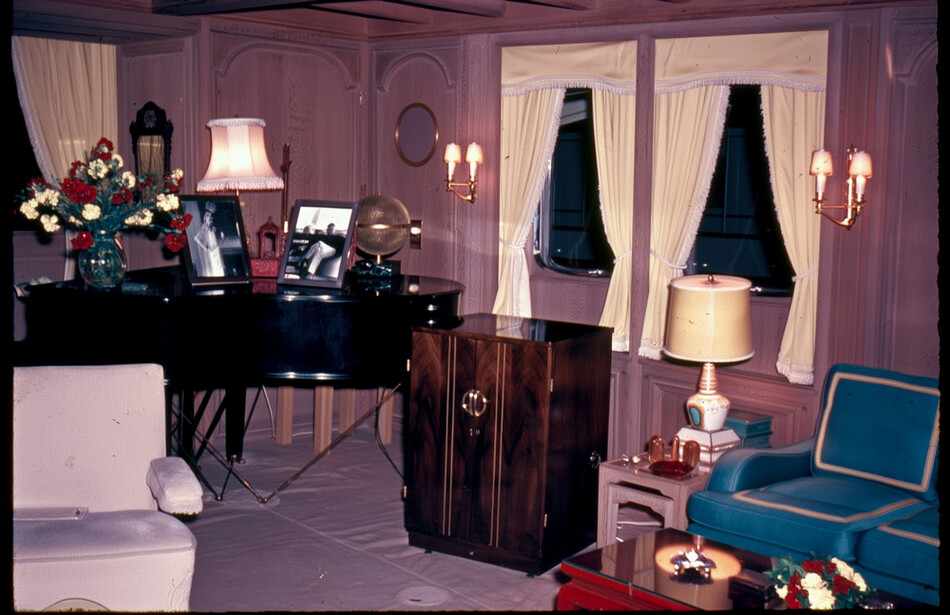
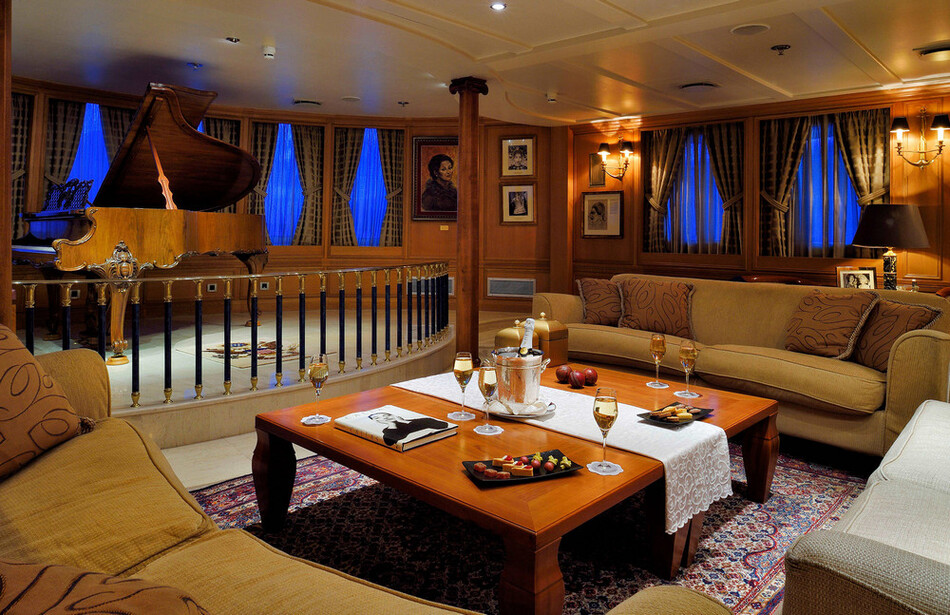
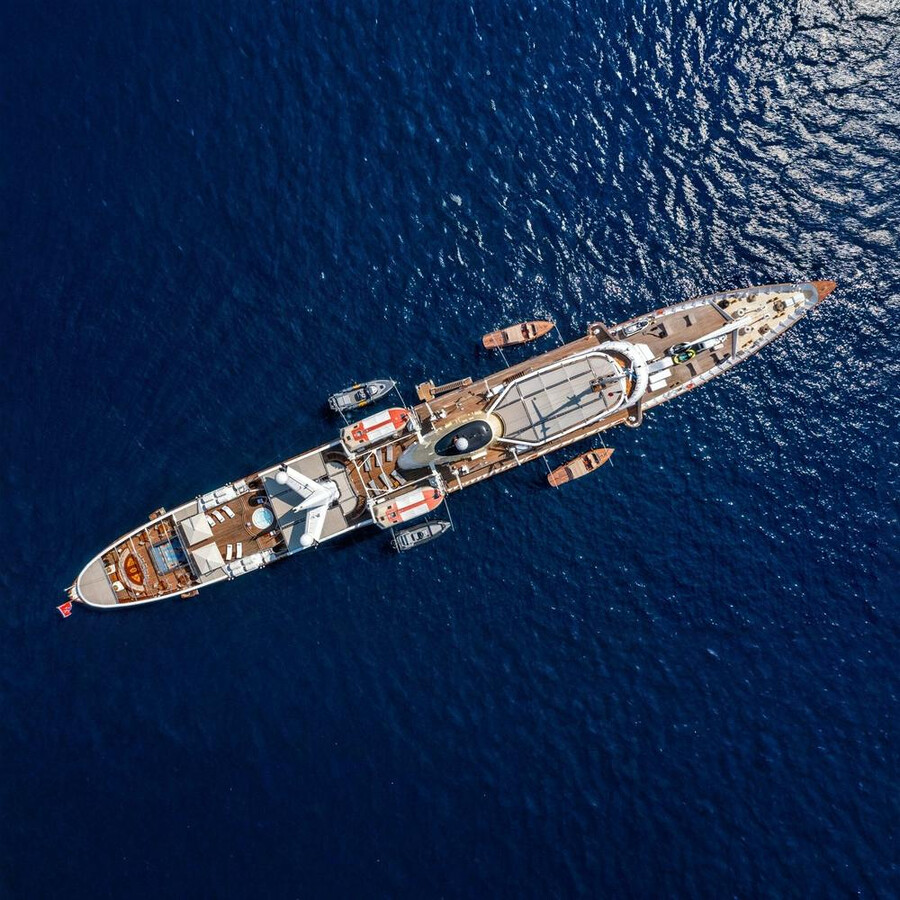
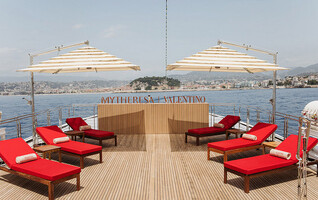
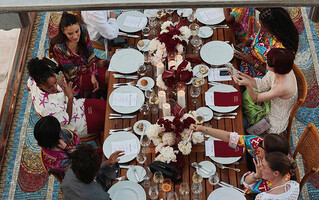
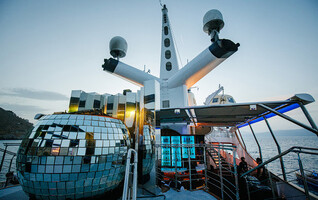
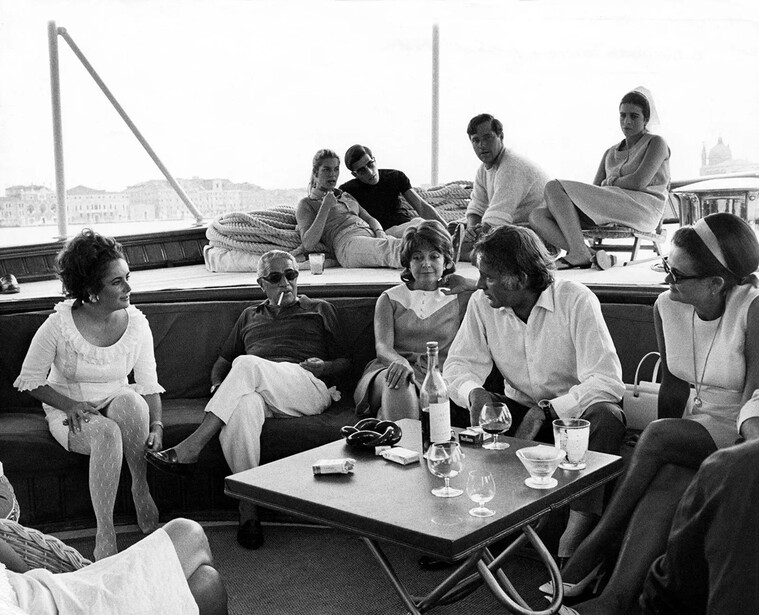
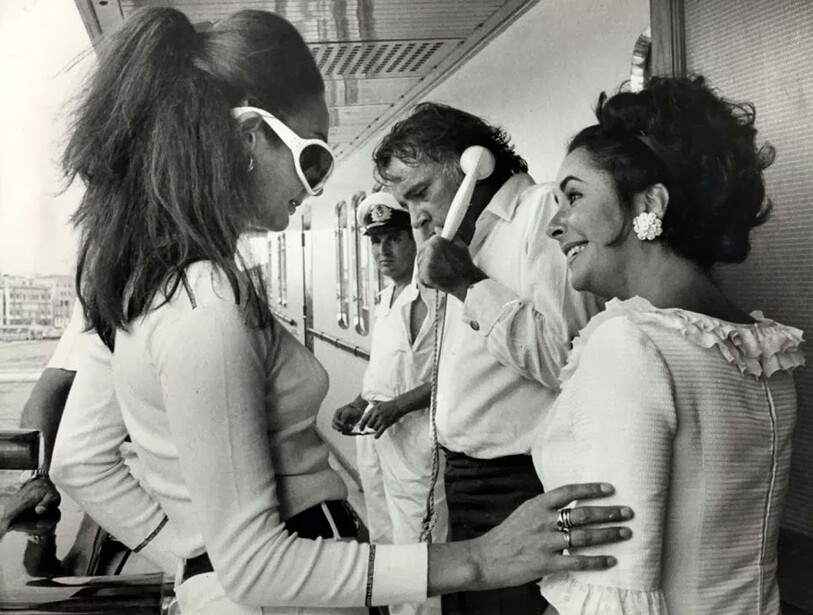
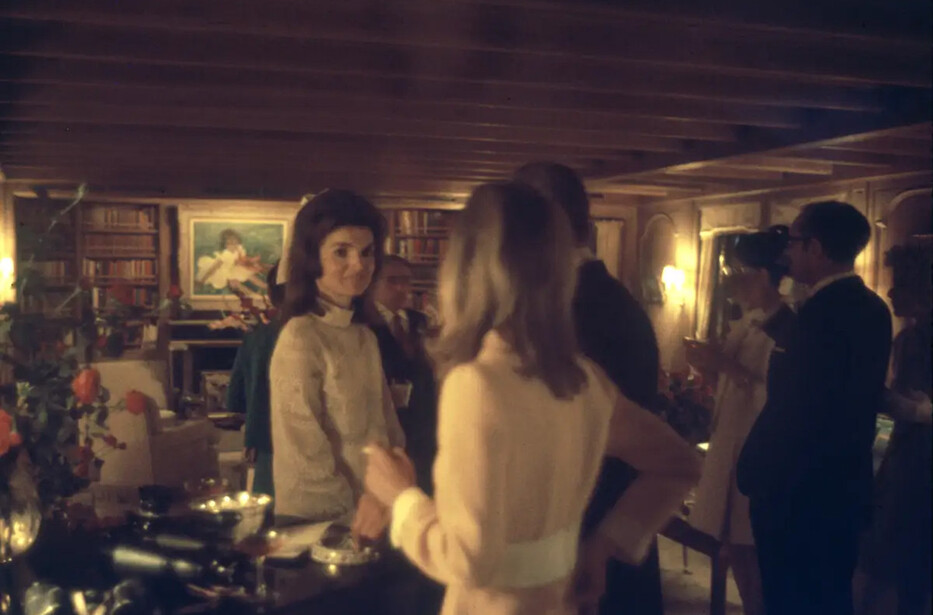
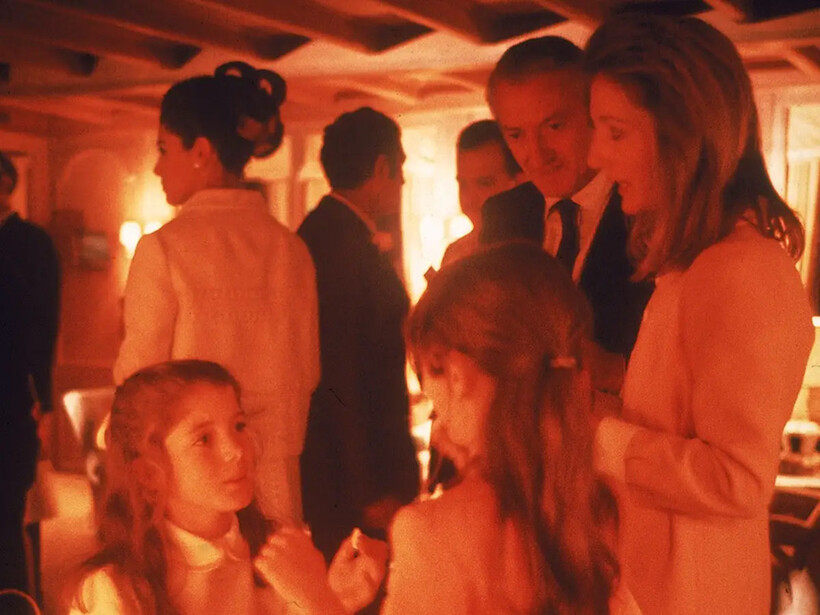
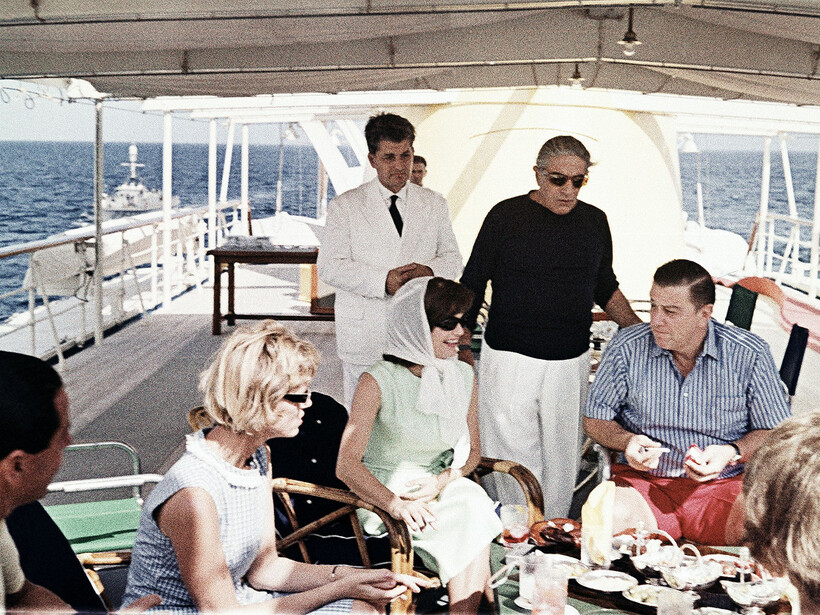
Christina was the embodiment of her owner’s professional and personal aspirations, and celebrities began gravitating towards her immediately. Spoiling influential guests with opulent receptions and comfortable cruises opened all the right doors for Onassis. Life on the yacht evolved into an infinite cycle of lavish temptation. Christina’s guest list included high ranking statesmen and businessmen—John F. Kennedy, Sir Winston Churchill, Rockefellers and Rothschilds, Paul Getty, Giovanni Agnelli and Prince Rainier III of Monaco—as well as the brightest movie and show business stars—Marilyn Monroe, Liz Taylor, Richard Burton, Frank Sinatra, Liza Minnelli and Rudolf Nureyev.
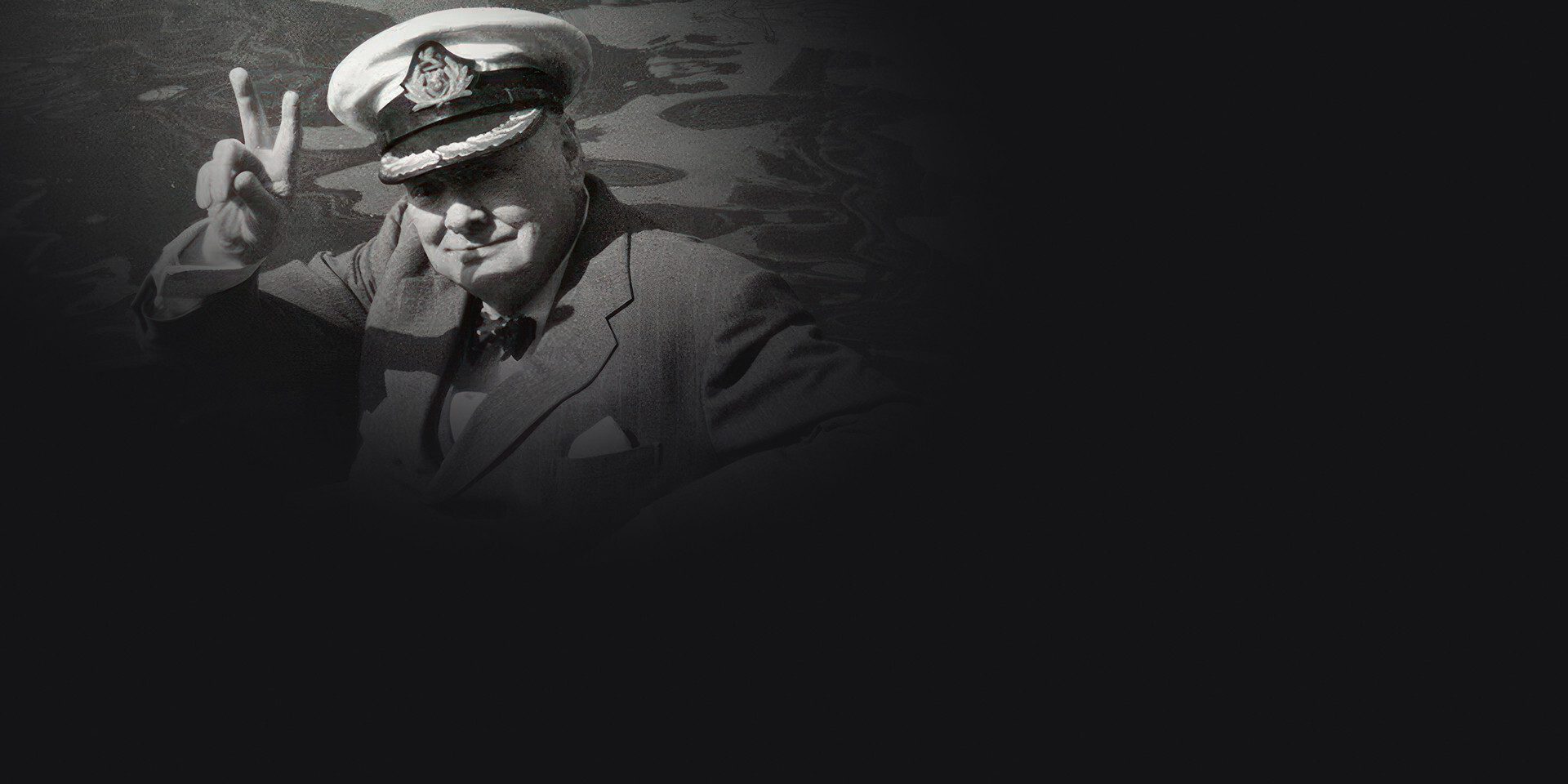
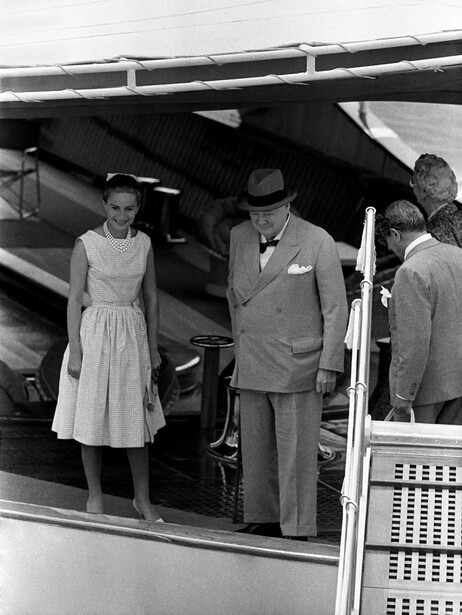
In 1956, Churchill wrote in a letter to his wife about Christina: “It is the most beautiful structure I have seen afloat”. The British Prime Minister made eight voyages on the yacht. There, he found inspiration and engaging company, while staying away from the tumultuous political world.
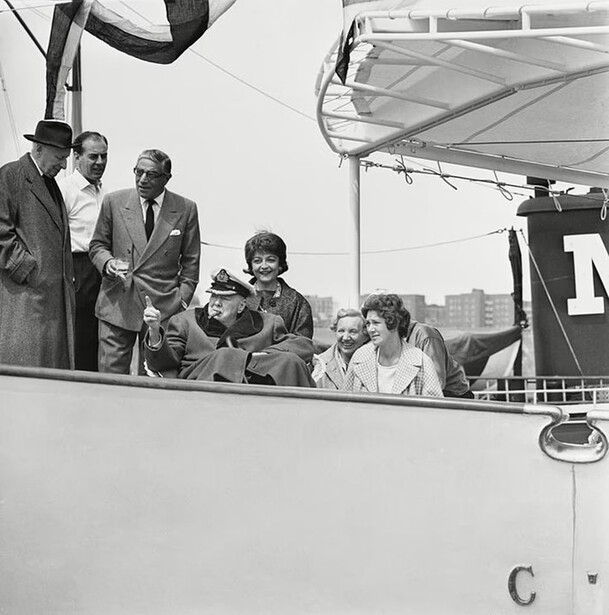
Churchill and Onassis met in south France and got on like a house on fire. The two tycoons shared a love of the finer things in life as well as for the inner workings of the global power—it was on these two pillars that their mutually beneficial friendship developed. Many photos of Churchill sitting on Christina’s aft deck with a cigar were being published all over the world. Onassis revelled in the fact that Sir Winston Churchill used to visit his yacht.
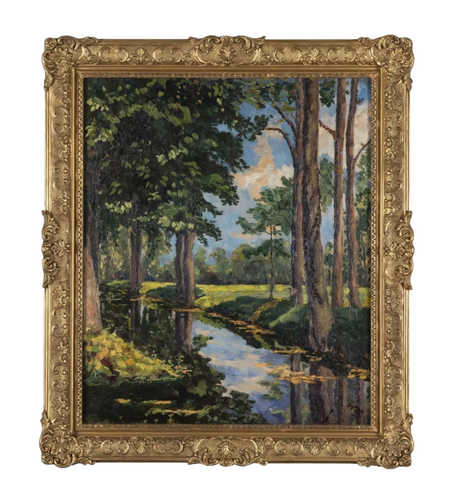
Onassis would go to great lengths to ensure Churchill’s comfort, and always gave up his personal suite for him—a luxury no one else enjoyed. Naturally, the guest of honour was also provided with an unlimited supply of champagne, caviar, martinis, cognac and cigars. He appeared to savour it with a characteristic gusto. Churchill appreciated Onassis’ hospitality. In one of his letters he wrote: “You have done much to make my voyages happy and pleasurable, and I am truly indebted to you”. Churchill presented Onassis with his own painting The Moat, Breccles as a token of friendship. A lifelong painting enthusiast, Churchill created some 500 canvases.
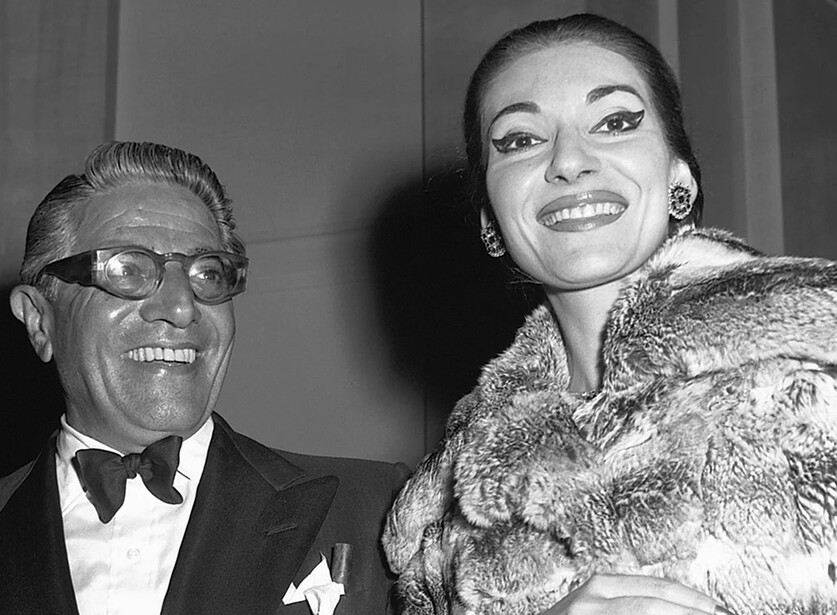
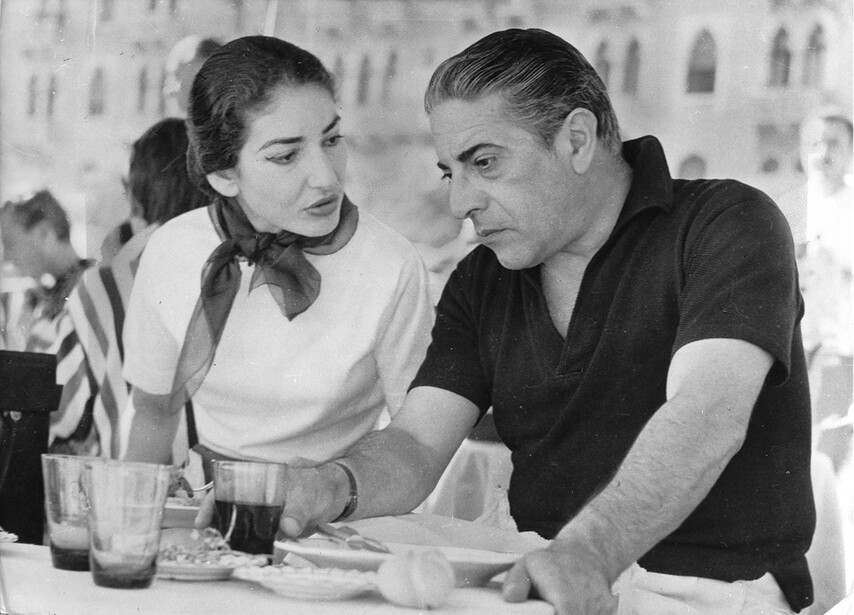
Maria Callas, an outstanding opera singer and one of the greatest sopranos of the 20th century, was born in New York to a Greek family. She made her debut in Athens in 1941 and rose to international fame through roles in operas by Bellini, Donizetti and Verdi. Her distinctive powerful voice, wide vocal range and artistry as well as her beauty changed the perception of opera. Callas first met Onassis in July 1957 at a reception in Venice, and Onassis invited the diva and her husband, Giovanni Meneghini, to his yacht Christina. It was on the yacht that the affair between the “two most famous Greeks of the 20th century”, as Onassis once put it, began. It changed their lives—they left their spouses and happily voyaged aboard Christina for years to come.
The relationship ended when Onassis married Jacqueline Kennedy in 1968. Despite the painful breakup, Callas called the time spent with Onassis the most memorable years of her life.

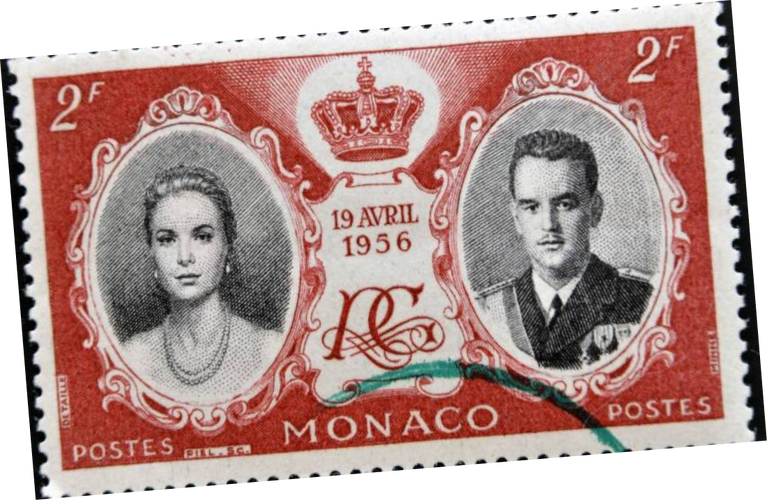
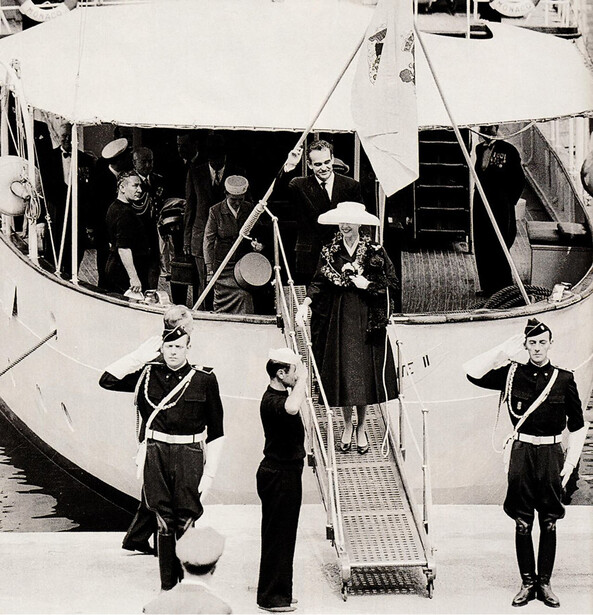
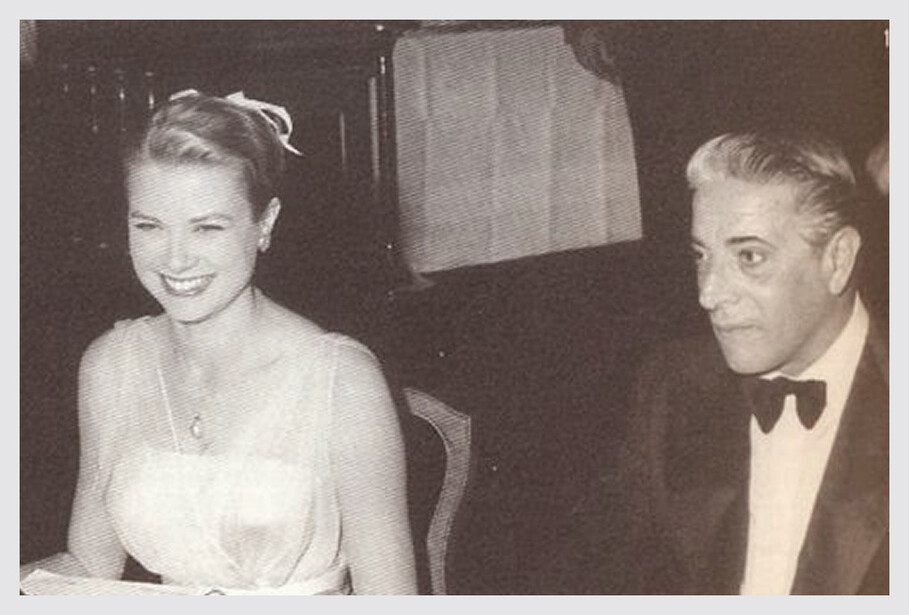
Rainier III and Onassis had a business relationship. As the major shareholder in the Société des Bains de Mer, which owned hotels, casinos and a yacht club in Monte Carlo, Onassis controlled almost a third of Monaco’s territory and had plans to turn the principality into a tax haven and a resort for the wealthy. He suggested that Prince Rainier marry a famous woman to attract attention to Monaco. Marilyn Monroe was his first choice for a potential bride, however, after Rainier met a 26-year-old American actress Grace Kelly, their romance culminated in a marriage that became the talk of the whole world.
To mark the wedding, Onassis hosted a grand reception on his yacht Christina and presented the newlyweds with a Deo Juvante II yacht, on which they sailed off for their honeymoon trip.

Two Hollywood stars whose passionate relationship and an extravagant lifestyle are surrounded by myths were frequent guests on Onassis’ yacht. Their affair began in 1962 on the set of Cleopatra, when both were married to other people. The couple got married twice and divorced twice, their life hand in hand with eccentric behaviour. Some biographers believe that their joint Who’s Afraid of Virginia Woolf? is a reflection of the actors’ relationship.
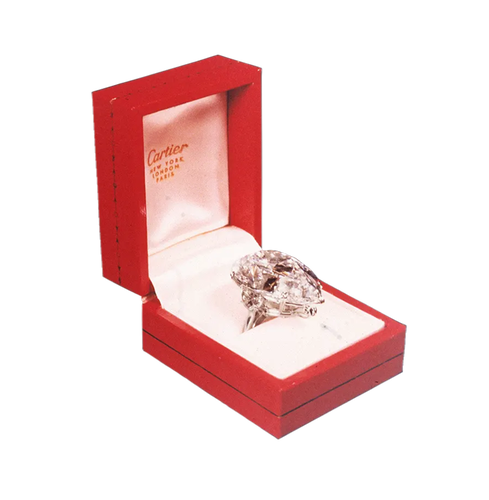
The couple did not skimp on gifts to prove their devotion. Taylor bought a Van Gogh painting for Burton while he presented her with jewellery items, a 69-carat Cartier diamond worth $1.1 million among them.

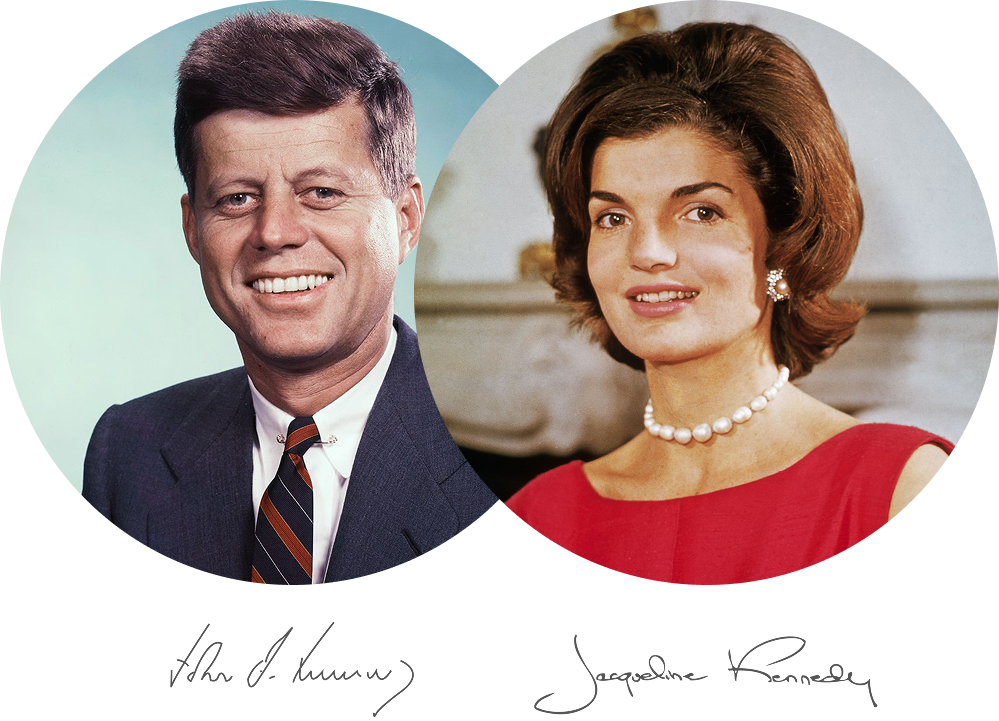
The Kennedys first stepped aboard the Christina in 1958 in a port in Monaco, when Winston Churchill was a guest on the yacht. Sir Winston Churchill was a respected authority for the future US President. They say that after meeting Churchill Kennedy, dressed in a white dinner jacket, asked his wife: “How did I do?” to which Jackie jokingly replied, “I think he thought you were the waiter!”
A year later, Christina brought Churchill and Kennedy together once again. The two politicians were discussing Kennedy’s presidential prospects, and the latter pointed to Catholicism as a possible obstacle. Churchill replied, “If that’s the only difficulty, you can always change your religion and still remain a good Christian,” making Kennedy laugh.
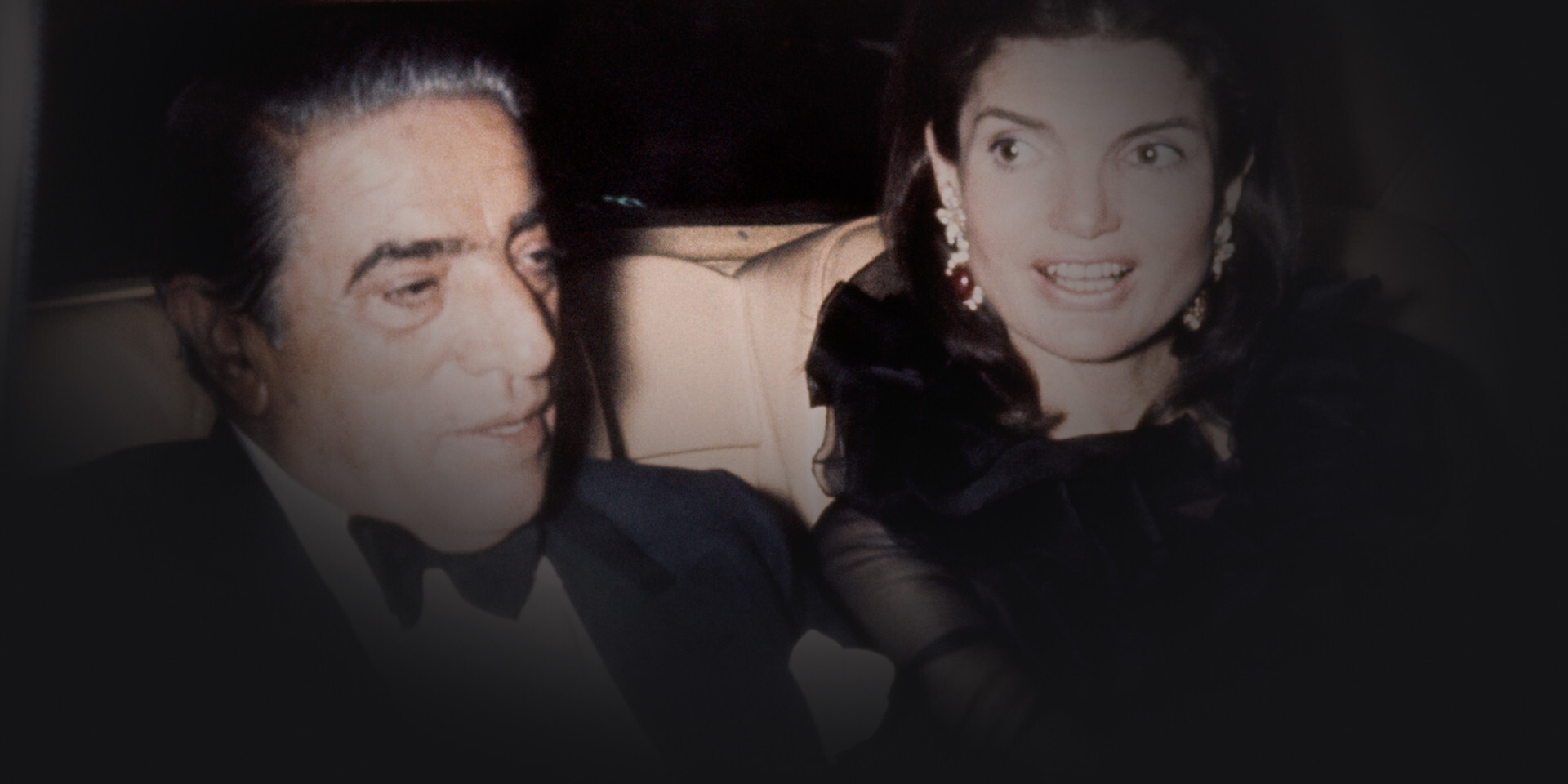
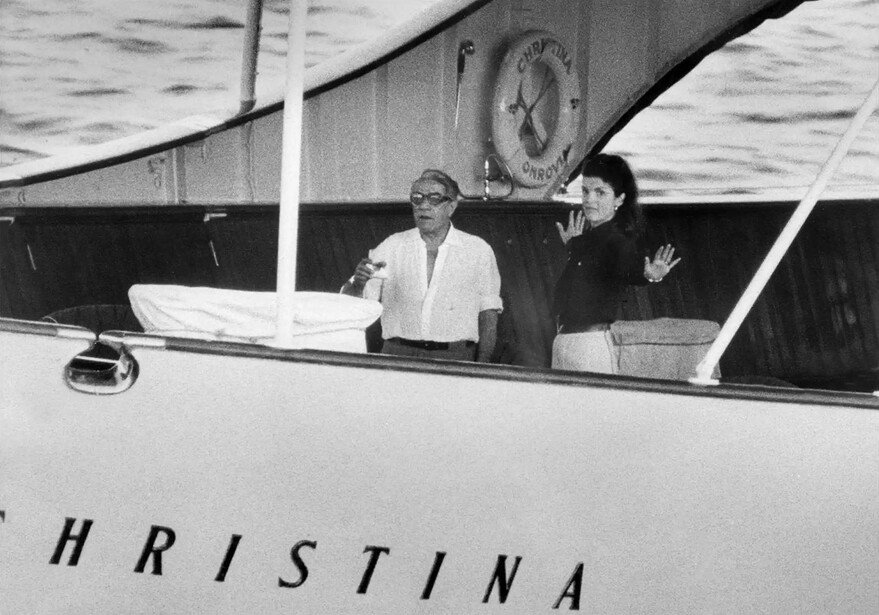
After becoming a widow in 1963, Jacqueline Kennedy started to visit the yacht more often and gradually grew closer to Onassis. Their mutual attraction led to them marrying in 1968, celebrated with a formal reception aboard Christina. The marriage lasted until Onassis’ death in 1975.








After Onassis’ death in 1975, his daughter Christina inherited the yacht. Three years later, she handed it over to the Greek government that renamed her to Argo. After having used the yacht for a while, the government abandoned her. The vessel was looted, the iconic Siena marble bathtub among the most tragic losses.
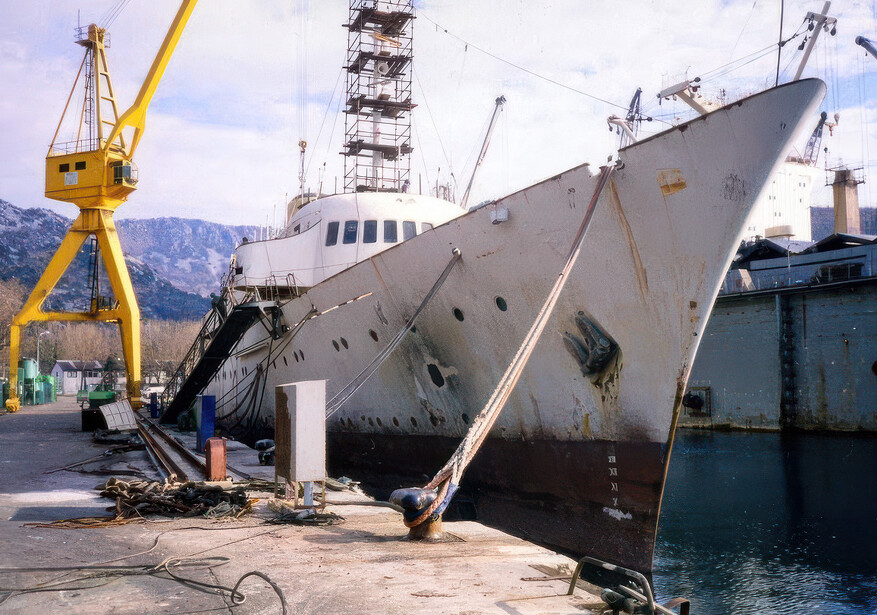
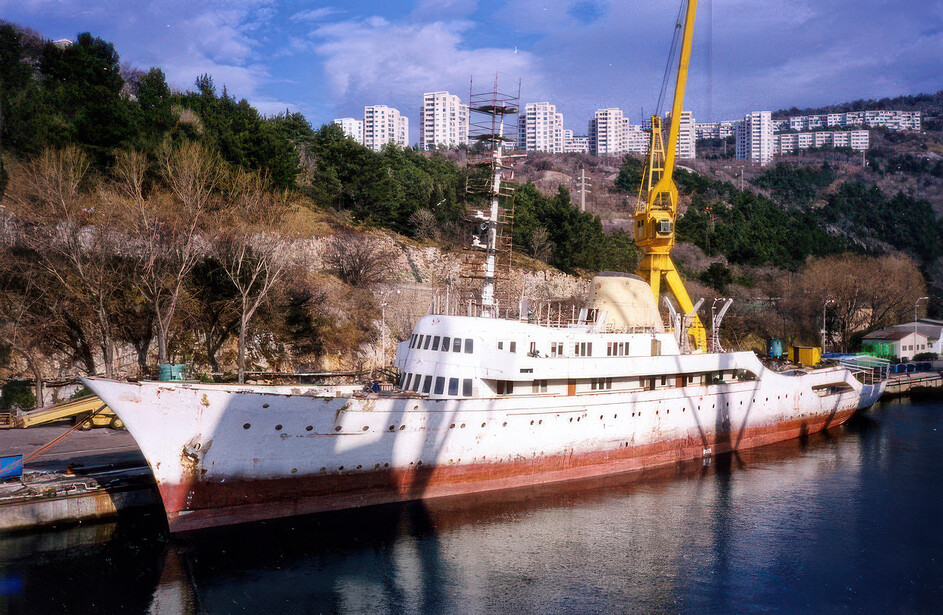
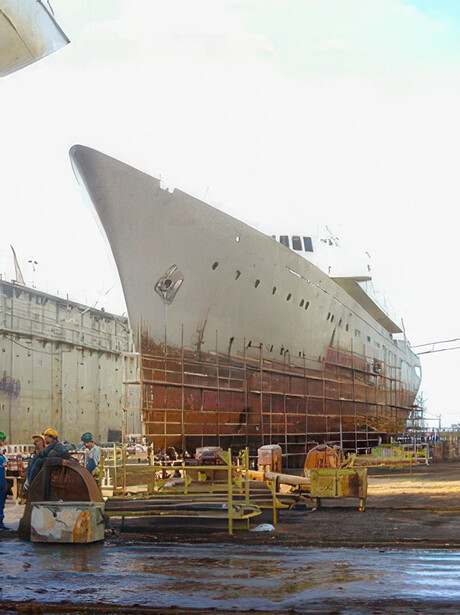
In 1998, Yannis-Pavlos Papanikolaou, a businessman and friend to the Onassis family, purchased the yacht at a public auction aiming to restore it to its former splendour and prestige.
Architect Kostas Karabelas was in charge of reconstruction, while Apostolos Molindris handled the interior. The renovations began in January 1999 at the Viktor Lenac shipyard in Croatia. Diagnostics revealed that 65 per cent of the hull had to be completely replaced, which stranded the yacht in dry dock for almost a year instead of the expected 60 days. The entire renovation lasted 16 months and costed $50 million. In the summer of 2000, the reconstructed Christina O, having regained her former beauty and glory, was handed over to her owners. During the renovation, the hull was reinforced to meet modern safety standards for charter boats. The teak covering on the sundeck and some portlights on the lower deck were removed due to new regulations.
Three original steam engines have been replaced with two MAN diesel engines with an output of 2775 hp. This has cleared some space on the main deck, which now fits a large dining room and a lounge with sofas, games table and a piano. At the aft end of the lower deck, eight new guest cabins have been added. There is also a new professional galley, cold food storage, a gym and an English club styled lounge. The smokestack is now home to an air-conditioning system and a back-up generator.
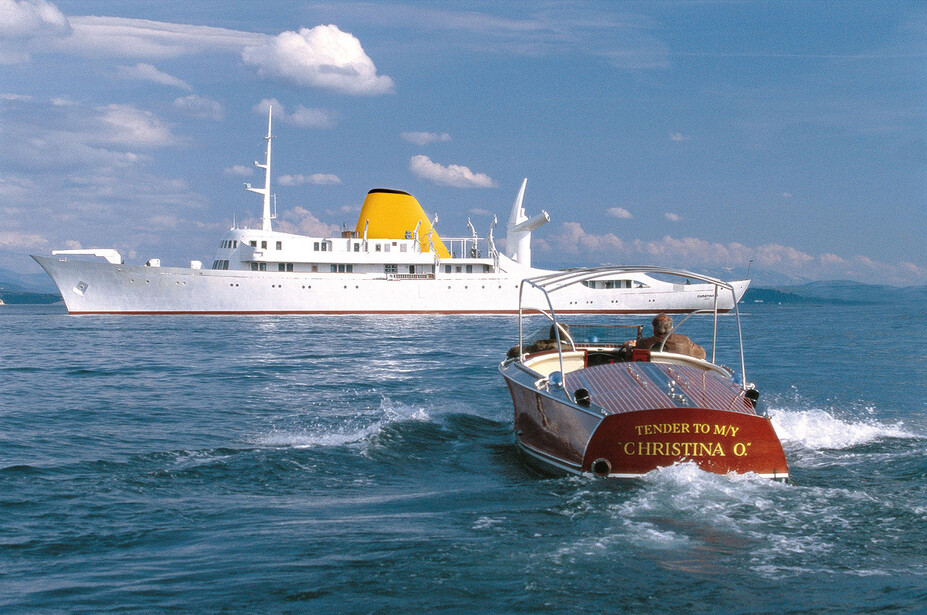
The fleet of tenders has decreased in size as well as number compared to Onassis’ time; however, the two original HackerCraft mahogany tenders are still there.
Next renovation, in addition to a full maintenance and refit, the aft deck was fitted with a mobile awning system. A new deck platform made going on and off the tenders that much easier. The best Mulberry and JR Scott fabrics as well as exclusive Giorgetti furniture were used to update the interior.
Preserving the air and aesthetic of the Onassis’ era, Christina O remains one of the most luxurious yachts available for charter. The historic yacht offers comfort at the highest level by fusing authentic surroundings with modern amenities.
Christina O can accommodate up to 34 guests in 17 cabins named after Greek islands—as per tradition.
Onassis’ lavish suite has been preserved in an almost pristine condition. Some items from Onassis’ time include wall lamps, leather sofas, and a monumental spiral staircase with handrails adorned by onyx and silver.
The Ari’s Bar, made from wood of a sunken Spanish galleon, hasn’t changed much—only the famous stools have been given new upholstery. The world map on the wall remains where it was.
The lapis lazuli encrusted fireplace is purely for decoration now, for safety reasons. The original Steinway grand piano Maria Callas rehearsed at as well as the singer’s record collection are still there.
Richard Burton once said about Christina, “I do not believe that any man or woman in the world would resist the temptation and the pure narcissism shamelessly flaunted on this boat.” Christina’s power to tempt is truly undeniable, and chances are the 22nd century shall be hearing her siren song, too.